Arts & Entertainment — Movie Review
Sing Street at Ten: The Movie That Cast Musicians First
November 27, 2026
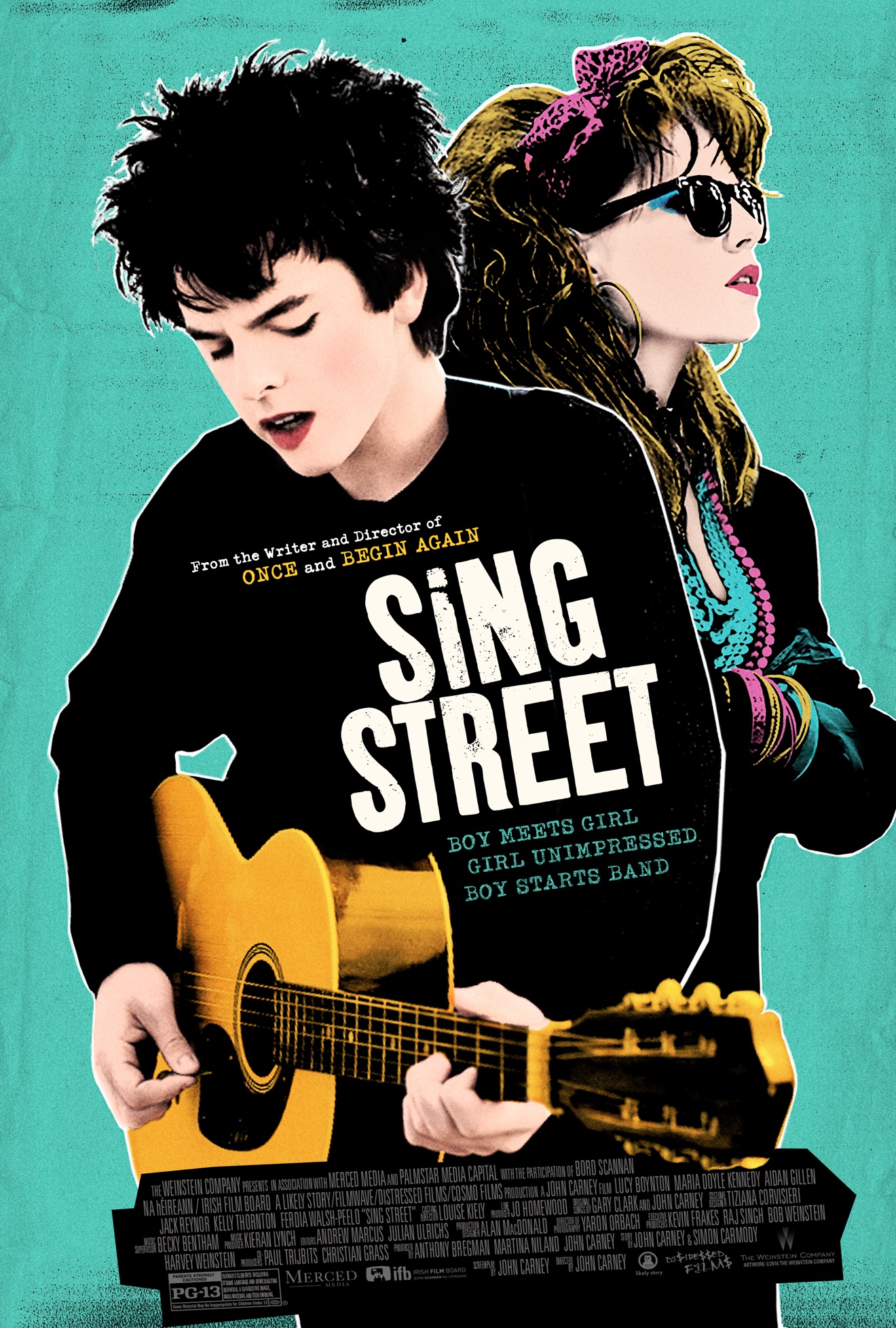
Dublin, 1985. A 15-year-old boy gets pulled out of private school when his parents run out of money and lands in a rough Christian Brothers school on Synge Street, where the principal humiliates him over his brown shoes and a bully marks him on day one. His parents are splitting up in a country where divorce is still illegal. Then he meets a girl outside the school gates, tells her he’s in a band, and has to go build one. That’s Sing Street, John Carney’s 2016 film, back in the conversation ten years on with a 10th-anniversary soundtrack edition and a 4K release. The anniversary is a good excuse, but it isn’t the reason the film lasts. The reason is simpler: the music is real, and you can hear it in every scene.

The Band Wasn’t Faking It
Most films about bands fake it. They hire actors, teach them three chords, cut away before the fingers have to match the sound. Carney did the opposite. He held a six-month open call across Ireland and looked for kids who could play. They showed up with guitars and drum kits, did a song, an interview, then a scene. That’s how he found Ferdia Walsh-Peelo, the boy who plays Conor. Walsh-Peelo was a boy soprano who’d toured an opera and trained on piano, and he’d never acted a day in his life. He nearly went home after five hours in the audition queue. He stayed, and he sings the songs himself. The rest of the band were the same story, kids who’d never acted, and they carry the film like they’ve been doing it for years.
That choice is the whole film. Carney was a working bassist before he was a director, in The Frames in the early nineties, and he went to Synge Street himself. He knows what a school band sounds like because he was in one. So when Conor’s band starts writing, the film treats songwriting like the real thing, not a montage. There’s a single unbroken shot that circles the rehearsal room and carries a song from a bedroom idea to a living-room rehearsal to a full studio production. Any songwriter who’s watched a half-finished chorus turn into something will recognize it.
The Performances
And the performances hold up their end. Carney directs like a musician, letting scenes breathe and keeping the camera on the kids instead of cutting around them, and the characters grow in front of you. Conor walks in shy and walks out a frontman, his hair and his sound changing with every record Brendan hands him. Raphina stays a mystery right up to the end, which is the point. Brendan is the one you’ll think about after, the brother who knows exactly how good he could have been. Even the bully ends up carrying amps. Nobody in this film feels cast. They feel found.
The Songs
The songs are the other reason it holds up. Gary Clark, who fronted the eighties Scottish band Danny Wilson, led the writing with Carney and a small team. The band’s sound changes with every record Brendan hands Conor. Early on it’s Duran Duran. Then The Cure. Then Bowie and Hall & Oates. The film is honest about how young bands actually find a voice: first you copy, then you steal, then one day the thing that comes out sounds like you. The licensed tracks, “Rio” and “In Between Days” and “Maneater” and “Town Called Malice”, sit next to originals like “Up”, “To Find You” and “Brown Shoes”, Conor’s answer to the principal and his shoes. The standout is “Drive It Like You Stole It”, which carries the film’s great fantasy sequence, a rehearsal that dissolves into a fifties American prom where everything broken in Conor’s life gets fixed. Adam Levine closes the film with “Go Now”, a song he wrote with Carney and Glen Hansard.
The soundtrack didn’t fade when the credits rolled. A decade on, the songs are still getting found, and the best of them feel like more than a memory. They feel like something you lived through.
The Brother
If the music is the film’s spine, the brother is its heart. Jack Reynor plays Brendan, the older brother who never made it, handing Conor the records and telling him to stop playing covers and find his own style. Every scene with Brendan is about records, and his lines are the ones that stick: rock and roll is a risk, and no woman can truly love a man who listens to Phil Collins. The closing credits carry the dedication “for brothers everywhere”, and by then you’ve earned it. The romance is sweet, but Brendan is the reason the film aches.
It’s a diamond in the rough. The songs, the performances, the craft, all of it plays at a level most bigger films never reach, and it deserves a bigger audience than it ever got. If you love songs, watch it. If you ever started a band, watch it twice.
Watch the Trailer
The official trailer, from Elevation Pictures.
Hear the soundtrack: Sing Street (Original Motion Picture Soundtrack) · Sing Street (10th Anniversary Edition) · YouTube — Sing Street, official trailer (Elevation Pictures) · More on the film
Sources: Wikipedia, “Sing Street” (the film, its cast, the awards) · Wikipedia, “Sing Street” soundtrack (the songs, the writers, the licensed tracks) · Metacritic (the critical score) · Discogs (the album credits, including who sings what) · YouTube, Sing Street trailer (the official trailer, from Elevation Pictures) · the film Sing Street itself. The take on the casting, the performances and the songs is the paper’s own.
Sing Street — written and directed by John Carney (2016). Original songs by Gary Clark and John Carney, with Ken and Carl Papenfus, Graham Henderson, and Zamo Riffman. Poster: Elevation Pictures.
the daily · franklin mckay